Launch offer — valid today only

📄 Digital book in PDF · read it on your phone or print it

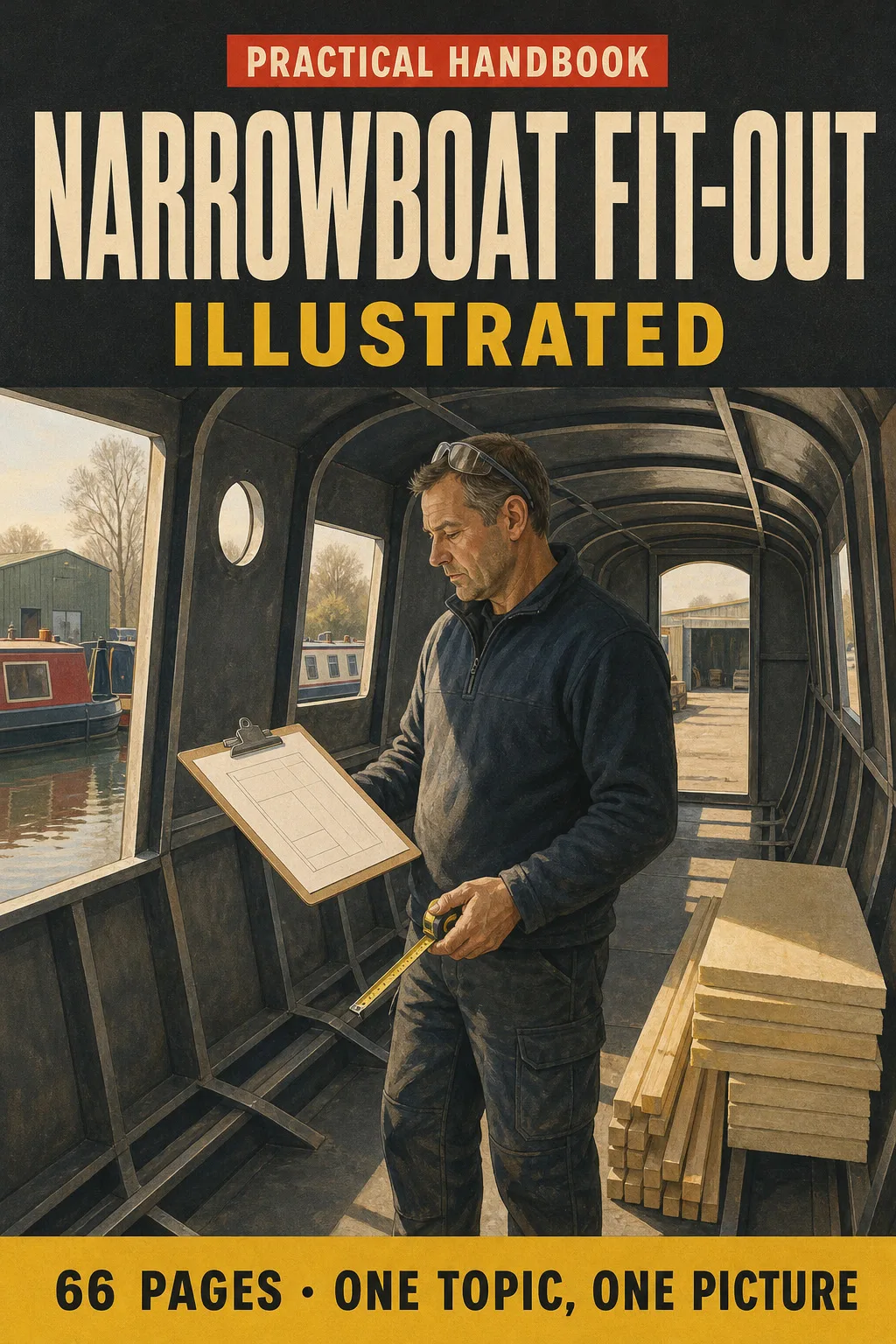
Narrowboat Fit-Out, From Sailaway Shell to Safety Check, in Drawings One Drawn Page per Job

For a sailaway shell on UK waters: layout, ballast, battens, insulation, vapour control, lining, bulkheads, 12V, plumbing and the galley. 66 illustrated pages, one per topic: the drawing first, then what you need to know. PDF by email, made to print. 66 illustrated pages.

START YOUR FIT-OUT THIS WAY

🔒 Secure checkout · PDF by email · 30-day guarantee

Every topic, its own pageEach stage of the job drawn, with the explanation beside it
66 illustrated pages9 parts, from the bare sailaway shell to the safety check
Up-to-date sourcesBoat Safety Scheme guidance, Recreational Craft Regulations 2017 and Canal & River Trust guidance
PDF by emailFormat

Look Inside the Book

Every page has one large drawing and a box with the measurements, rules and steps you need:

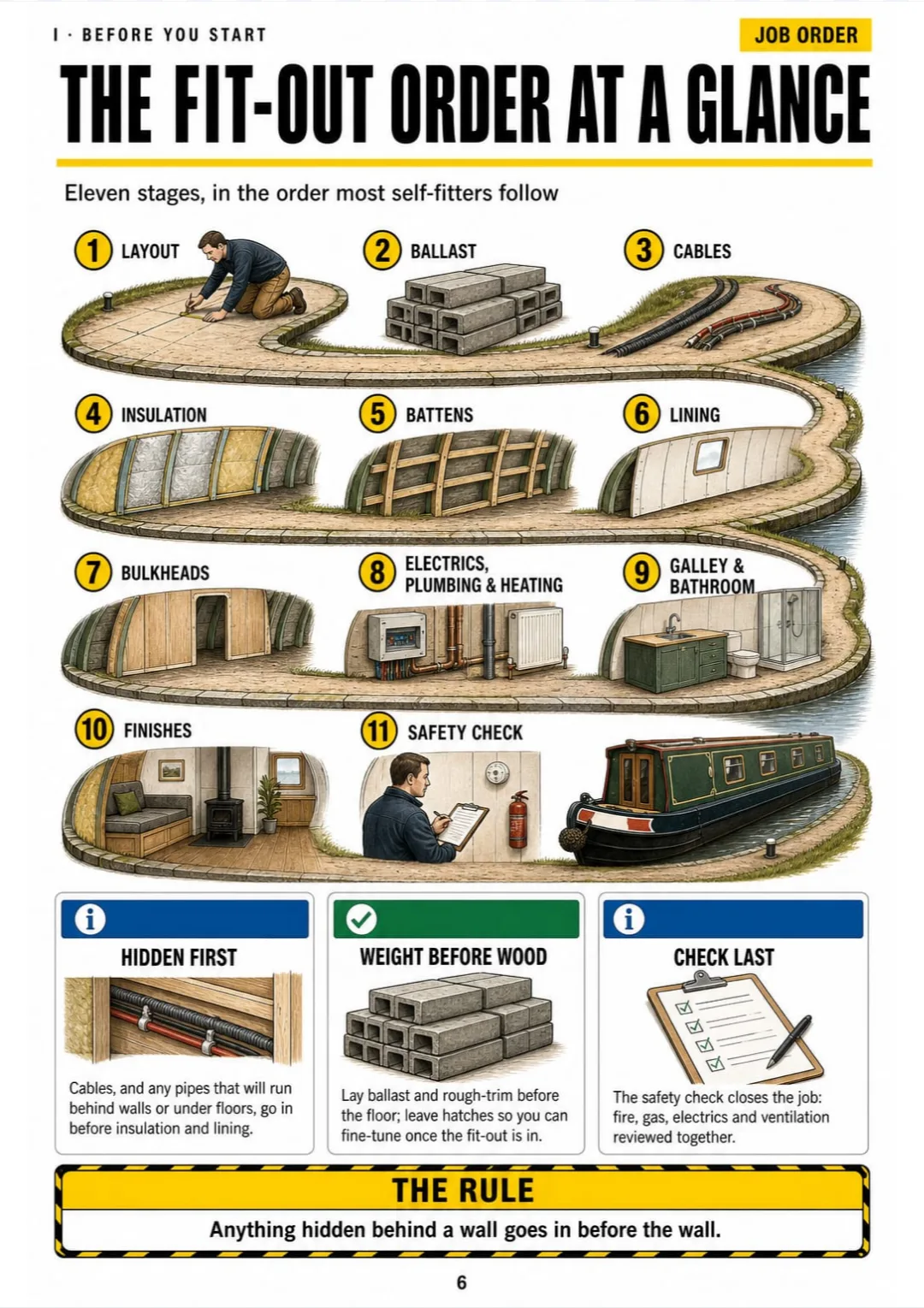
Layout → ballast → cables → insulation → battens → lining → bulkheads → electrics, plumbing & heating → galley → finishes → safety check.
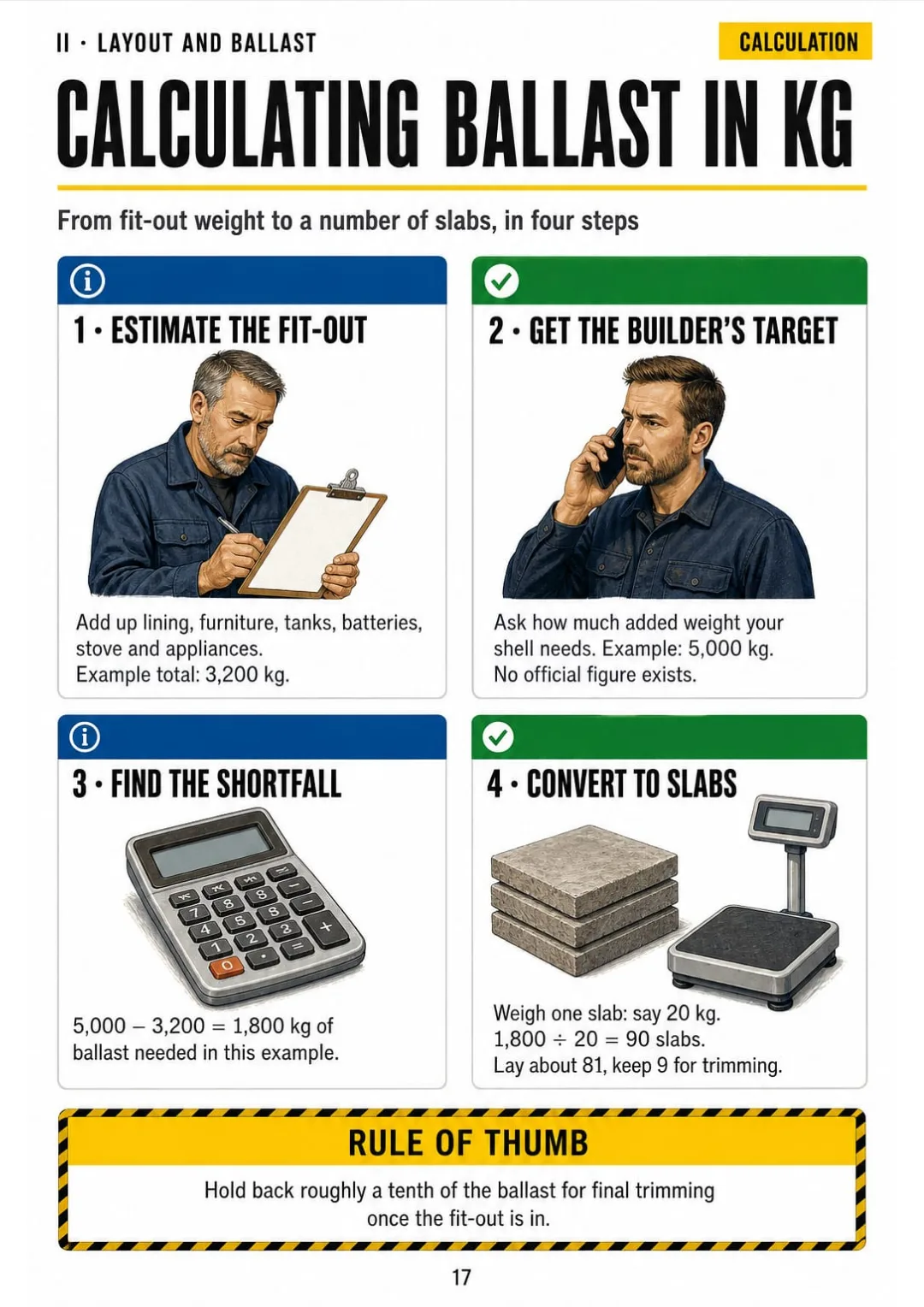
Worked example: 5,000 − 3,200 = 1,800 kg, or 90 slabs at 20 kg each
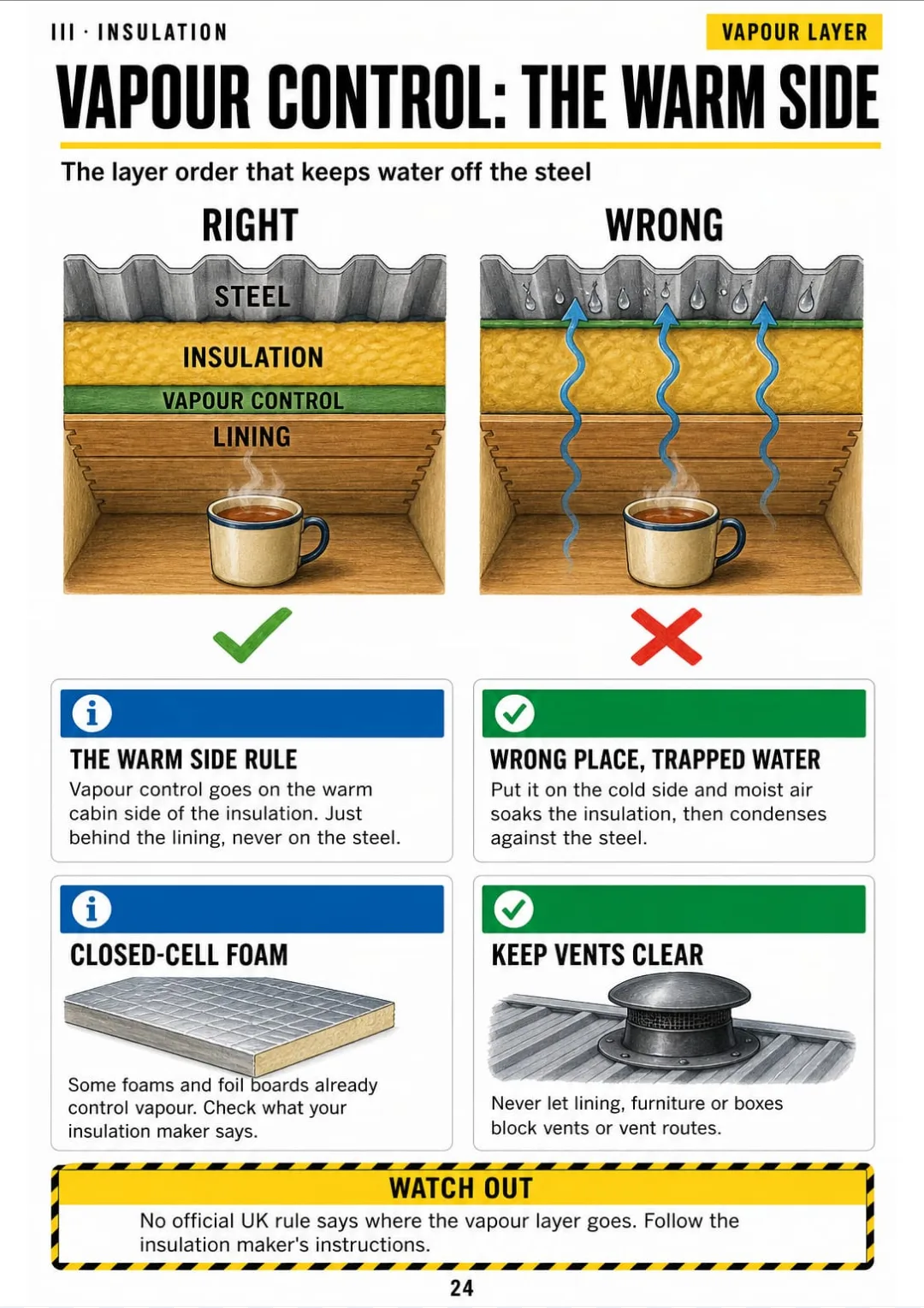
Steel, insulation, vapour control, battens, lining: the warm side rule in one diagram.
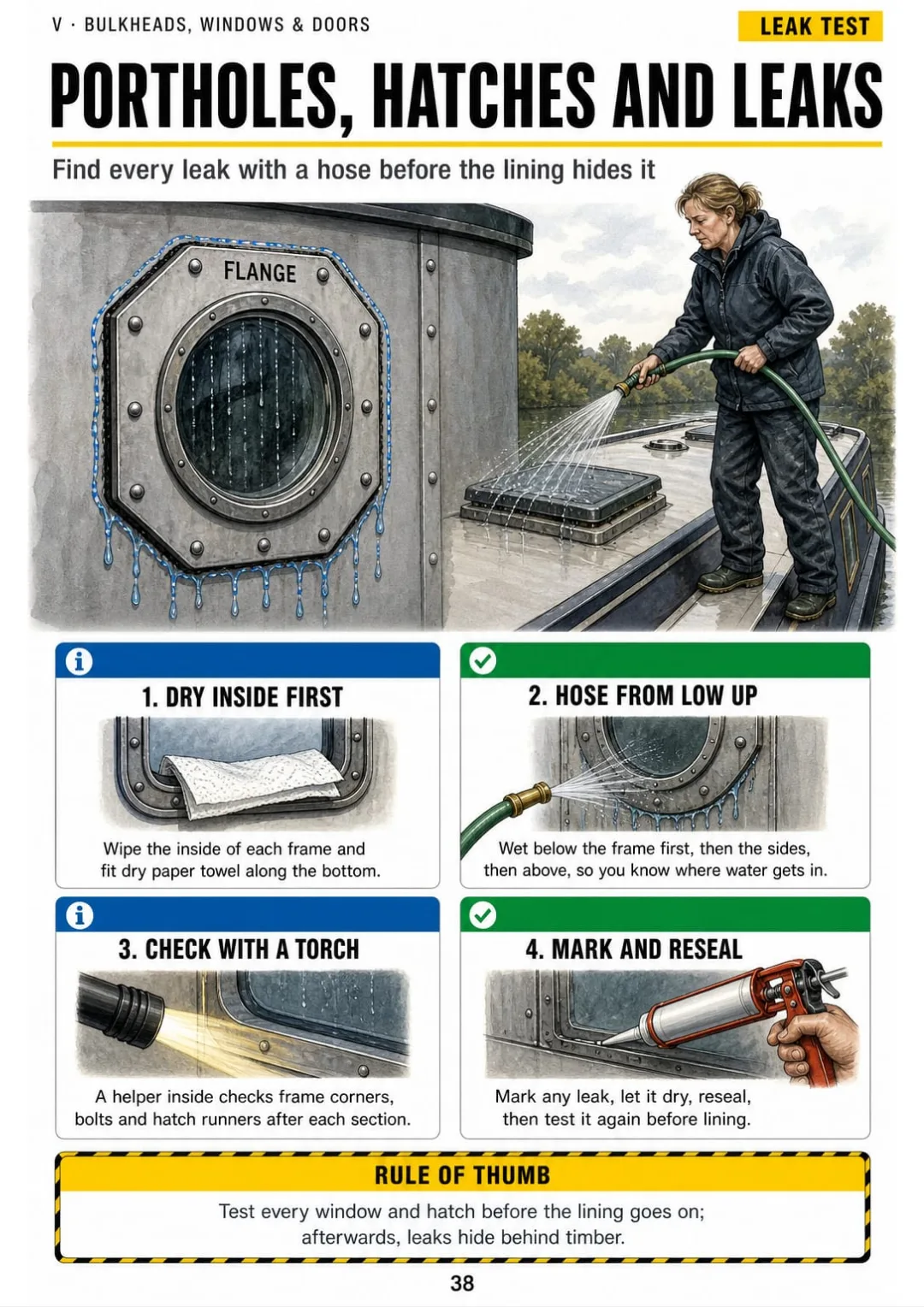
Frame seal, drip path and a four-step hose test for each window and hatch
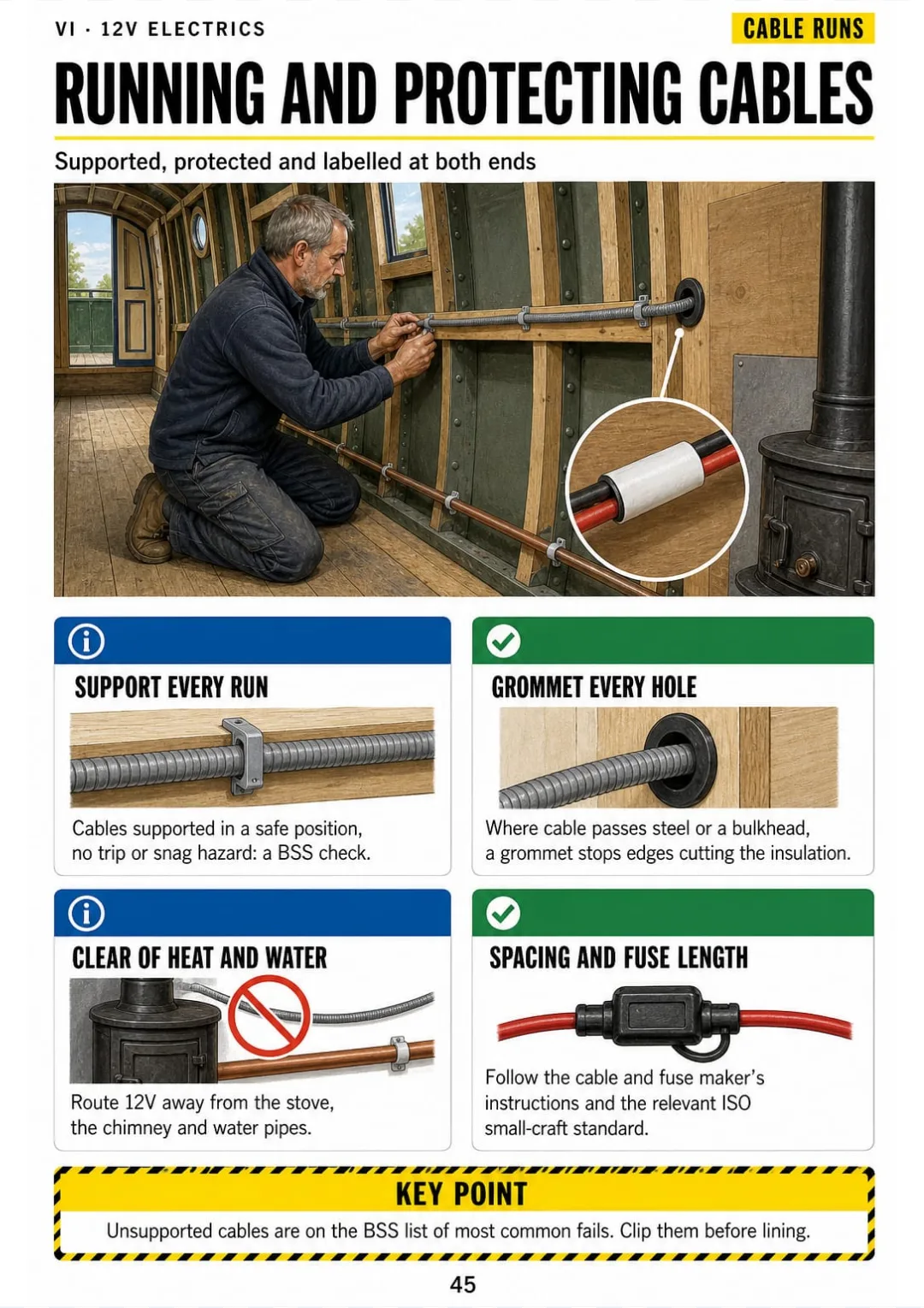
Cables supported in a safe position with no snag hazard (BSS check 3.3.1R)
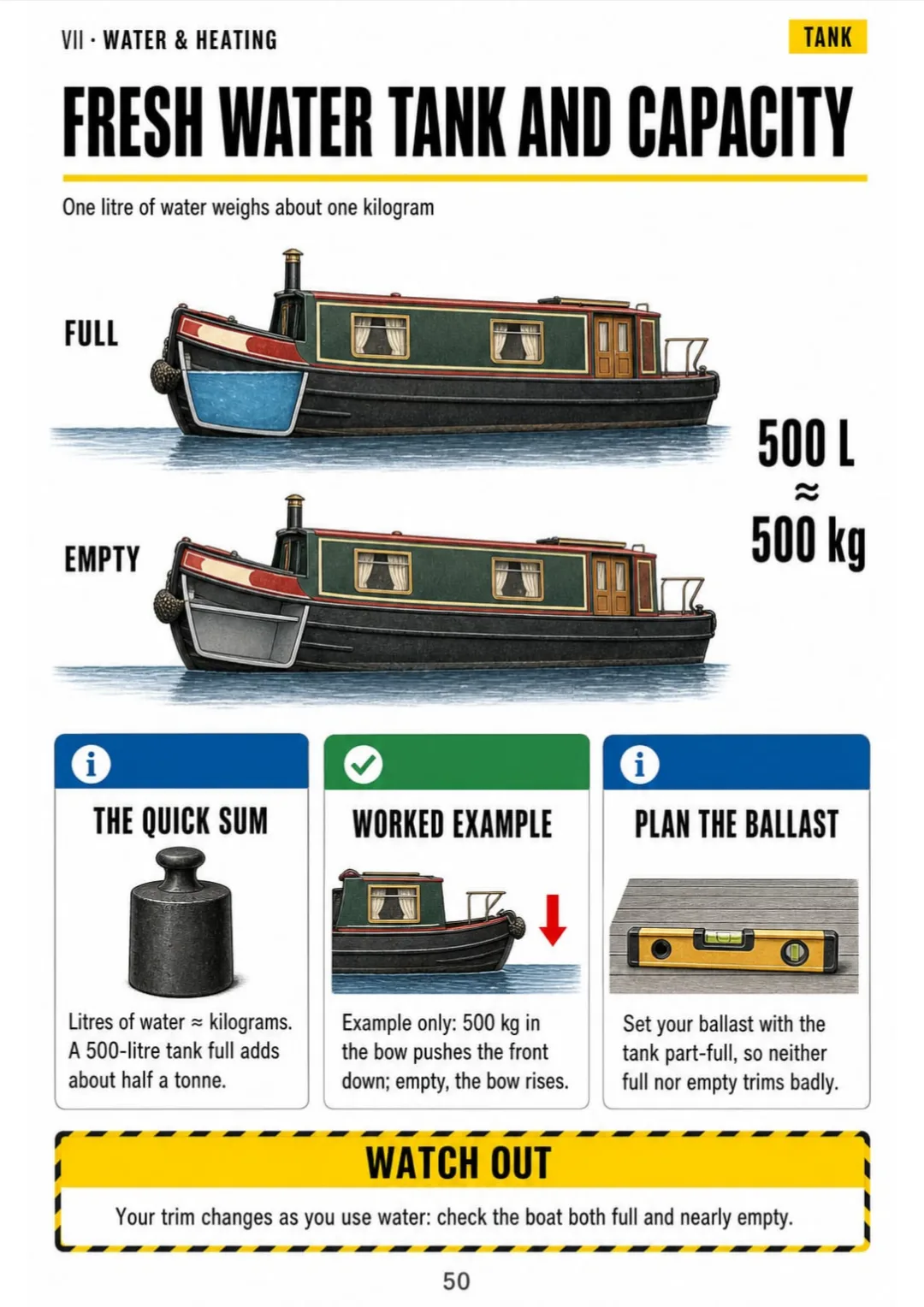
1 litre ≈ 1 kg: how a full bow tank changes trim compared with empty.
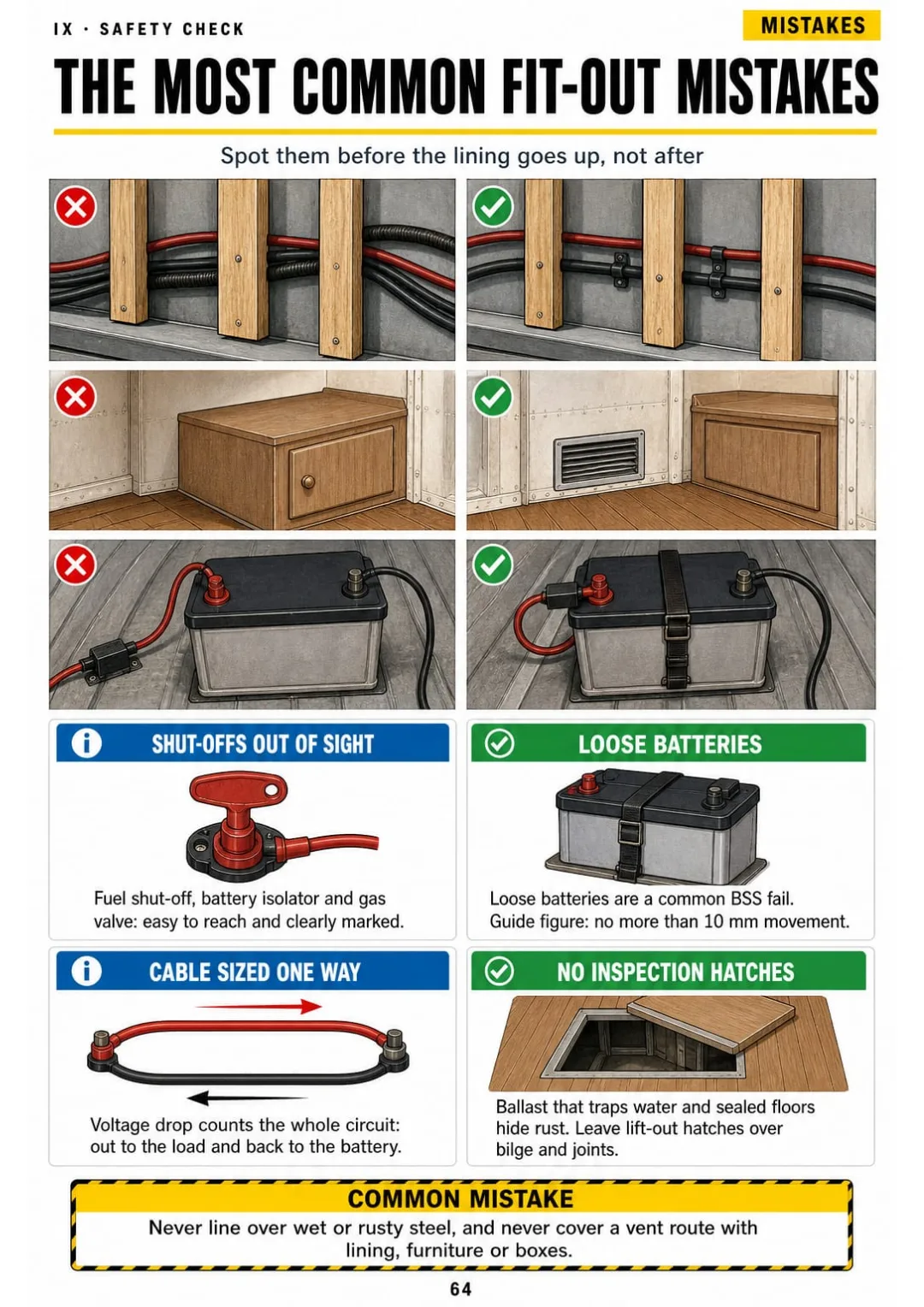
Wrong vs right: cables, vents, shut-offs, batteries, hatches.
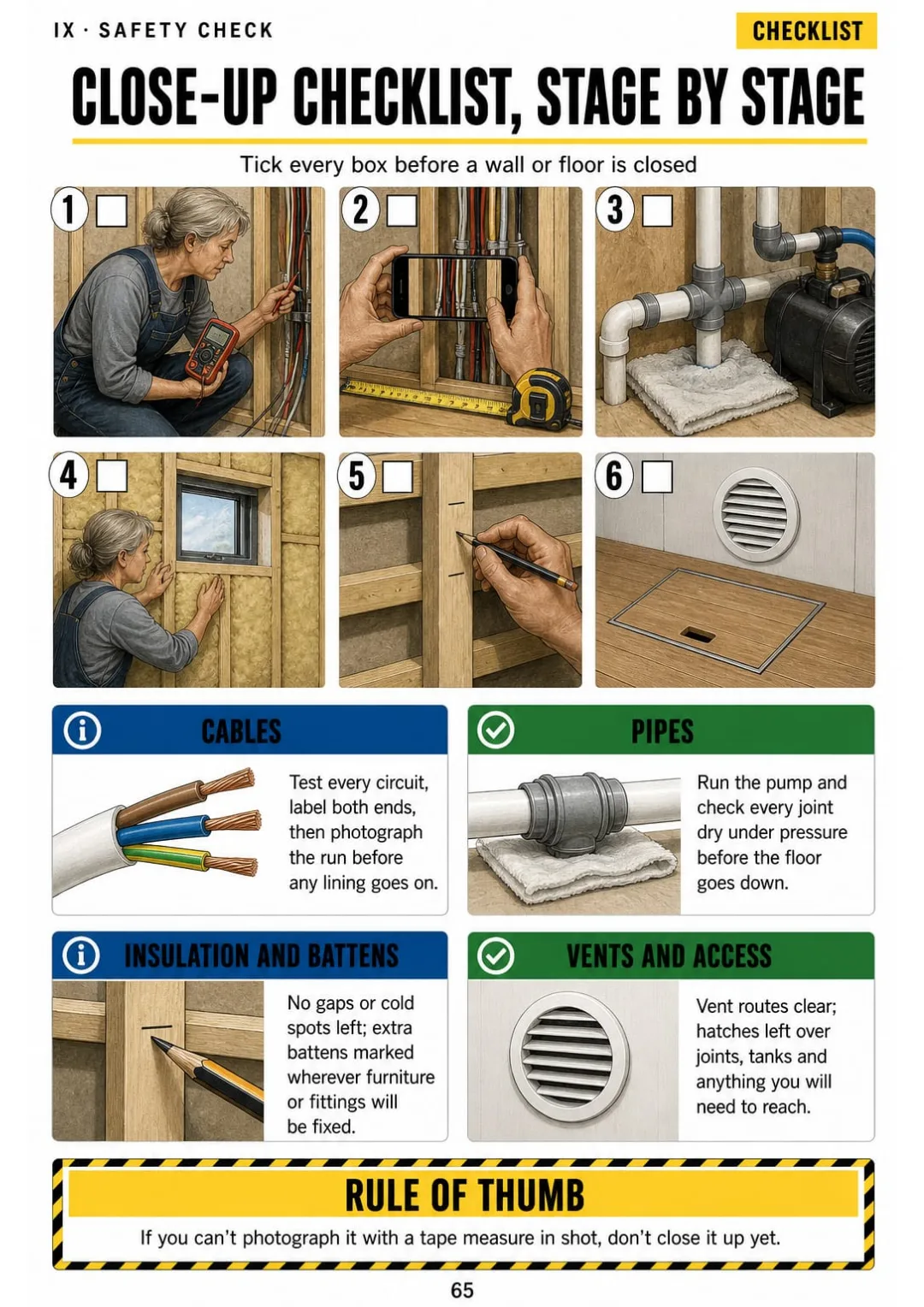
Six ticks before close-up: cables, photos, pipes, insulation, battens, vents.

Swipe to see more →

These are real pages from the book. The table of contents is the full one: 9 parts and 62 topics.

The Problem Isn't You. It's How It Was Explained.

You're standing in the bare shell with a roll of vapour control membrane and a stack of battens, and you can't decide which side of the insulation it goes on.

The forum thread says steel side, the next post says cabin side, and the manual explains it in long paragraphs. Nobody shows you why.

Steel, insulation, vapour control, battens, lining: the warm side rule in one diagram.

In the book it's one cut-through drawing: steel, battens, insulation, vapour control, lining, with the warm side marked, so you can see where the moist air stops.

Ballast in kilograms, batten spacing, the 12V diagram, the water plan and the hose test for every window: each one gets its own page, drawn the same way.

You look once, fix the membrane on the warm side and get on with the battens without opening another forum.

COMPARE FOR YOURSELF

The Same Topic, Two Ways to Learn It

THIS
  • The manual: line after line
  • Ballast sums explained only in words
  • You start the job still unsure
To determine the ballast requirement, the builder should first establish the target displacement of the completed vessel, typically derived from the shell specification, and subtract the estimated weight of the shell as delivered together with all fixed and anticipated fit-out items, including tanks, stove, batteries, furniture and linings, bearing in mind that water and fuel loads vary in service; the resulting difference, expressed in kilograms, represents the ballast to be distributed beneath the floor, subject to subsequent adjustment of trim both longitudinally and transversely once the principal items have been installed.
FOR THIS
  • Ballast worked out in one drawing
  • The kilograms in a box
  • You see it and you get it
Worked example: 5,000 − 3,200 = 1,800 kg, or 90 slabs at 20 kg each
CONTENTS

Take a Look at the 9 Parts and 62 Topics

Before you start, layout and ballast, insulation, battens and lining, bulkheads and windows, 12V electrics, water and heating, galley and bathroom, and the safety check: 66 pages, all illustrated.

IBefore You Start · pp. 5-10
  1. What a Sailaway Shell Gives You (and What It Doesn't)
  2. The Fit-Out Order at a Glance
  3. Paperwork and Insurance
  4. Self-Build and the Recreational Craft Rules
  5. Tools and Workspace on a Mooring
  6. Planning Your Saturdays
IILayout and Ballast · pp. 11-18
  1. Reading Your Shell: Length, Beam and Cabin Space
  2. Traditional, Reverse or Open-Plan Layout
  3. The Walkway Rule: Moving Through a 2-Metre Beam
  4. Weight Map: Where the Heavy Things Go
  5. Ballast: Why the Empty Shell Floats Wrong
  6. Ballast Materials Compared
  7. Worked Example: Calculating Ballast in Kilograms
  8. Trimming the Boat: Level Fore, Aft and Side to Side
IIIInsulation and Condensation · pp. 19-25
  1. Why Steel Boats Sweat
  2. Cold Bridges: Where Condensation Starts
  3. Insulation Options Compared
  4. Sprayed Foam: Prepping the Shell
  5. Board Insulation: Cutting and Sealing
  6. Vapour Control: Where It Goes and Where It Doesn't
  7. Ventilation Keeps the Boat Dry
IVBattens, Lining and Floors · pp. 26-33
  1. First Fix: Cables Before Battens
  2. Battens: Fixing to Steel
  3. Batten Spacing in Millimetres
  4. Marking Out Where the Furniture Goes
  5. Floor Bearers and the Floor
  6. Lining Options: Ply, Tongue-and-Groove, Panels
  7. Fitting the Cabin Sides
  8. Lining the Curved Roof
VBulkheads, Windows and Doors · pp. 34-39
  1. Bulkheads: Dividing the Cabin
  2. Cutting a Bulkhead to the Cabin Profile
  3. Internal Doors and Sliding Doors
  4. Window Linings and Trims
  5. Portholes, Hatches and Leaks
  6. Finishing Timber on Board
VI12V Electrics · pp. 40-48
  1. The 12V System in One Diagram
  2. Batteries: Types and Where They Go
  3. Working Out Your Daily Power Use
  4. Fuses: The First Thing After the Battery
  5. Cable Size and Voltage Drop
  6. Running and Protecting Cables
  7. Crimping, Terminals and Bus Bars
  8. Charging: Alternator, Solar and Shore
  9. 230V and Shore Power: When to Call an Electrician
VIIWater, Plumbing and Heating · pp. 49-56
  1. The Water System on One Plan
  2. Fresh Water Tank and Capacity
  3. Pump, Accumulator and Filter
  4. Hot Water: Calorifier and Engine Loop
  5. Pipework: Push-Fit Plastic and Joints
  6. Grey Water: Sinks and Shower Drain
  7. The Solid Fuel Stove
  8. Gas on Board: A Job for a Qualified Engineer
VIIIGalley, Bathroom and Cabin · pp. 57-61
  1. Galley Layout in a Narrow Space
  2. Fitting Worktops and Cupboards
  3. Toilets: Cassette, Pump-Out or Composting
  4. The Shower Room: Tray, Walls and Fan
  5. The Bedroom: Fixed Bed, Cross Bed or Dinette
IXSafety Check and Review · pp. 62-66
  1. Fire Safety on Board
  2. Preparing for the Boat Safety Examination
  3. The Most Common Fit-Out Mistakes
  4. Stage-by-Stage Close-Up Checklist
  5. Your Build File

One Page, One Topic, All Clear

Think of it this way:

It's Saturday morning at the mooring. The shell is empty, the slabs are stacked on the towpath and you need to know how many go in, and where.

You open the ballast page and the sum is drawn out for you: 1,800 kg, or 90 slabs at 20 kg, with the weight map right beside it.

Cables supported in a safe position with no snag hazard (BSS check 3.3.1R)

Vapour control, batten spacing, the 12V system and the water plan work the same way: each one on its own page.

Narrowboat Fit-Out Illustrated is 66 illustrated pages in 9 parts, with worked examples, the most common fit-out mistakes and a close-up checklist at the end.

What you see drawn, you don't have to memorize.

What's Inside Narrowboat Fit-Out Illustrated:

Ipp. 5-10

Before You Start

What a sailaway shell includes, the fit-out order at a glance, paperwork, the Recreational Craft rules, tools on a mooring and planning your Saturdays.

IIpp. 11-18

Layout and Ballast

Reading your shell, layout options, the walkway rule, the weight map, ballast materials, a worked ballast sum in kilograms and trimming, so the boat sits level before the floor goes down.

IIIpp. 19-25

Insulation and Condensation

Why steel boats sweat, cold bridges, sprayed foam and board, vapour control on the warm side and ventilation, so the lining goes up once and stays dry in winter.

IVpp. 26-33

Battens, Lining and Floors

Cables before battens, fixing battens to steel, spacing in millimetres, marking out furniture, floor bearers, lining options, cabin sides and the curved roof.

Vpp. 34-39

Bulkheads, Windows and Doors

Bulkheads and how to scribe them to the cabin profile, internal and sliding doors, window linings, portholes, hatches, leaks and finishing timber.

VIpp. 40-48

12V Electrics

The 12V system in one diagram, batteries, daily power use, fuses, cable size and voltage drop, crimping, charging, and when 230V needs an electrician.

VIIpp. 49-56

Water, Plumbing and Heating

The water system on one plan, tank, pump and accumulator, calorifier, push-fit pipework, grey water, the solid fuel stove and why gas is a job for a qualified engineer.

VIIIpp. 57-61

Galley, Bathroom and Cabin

Galley layout, worktops and cupboards, cassette, pump-out or composting toilets, the shower room and bed options.

IXpp. 62-66

Safety Check and Review

Fire safety, preparing for the boat safety examination, the 12 most common fit-out mistakes, the close-up checklist and your build file.

At the end of the book: Worked examples in kilograms and millimetres, the 12 most common fit-out mistakes and a stage-by-stage close-up checklist.

Plus: 2 Free Books

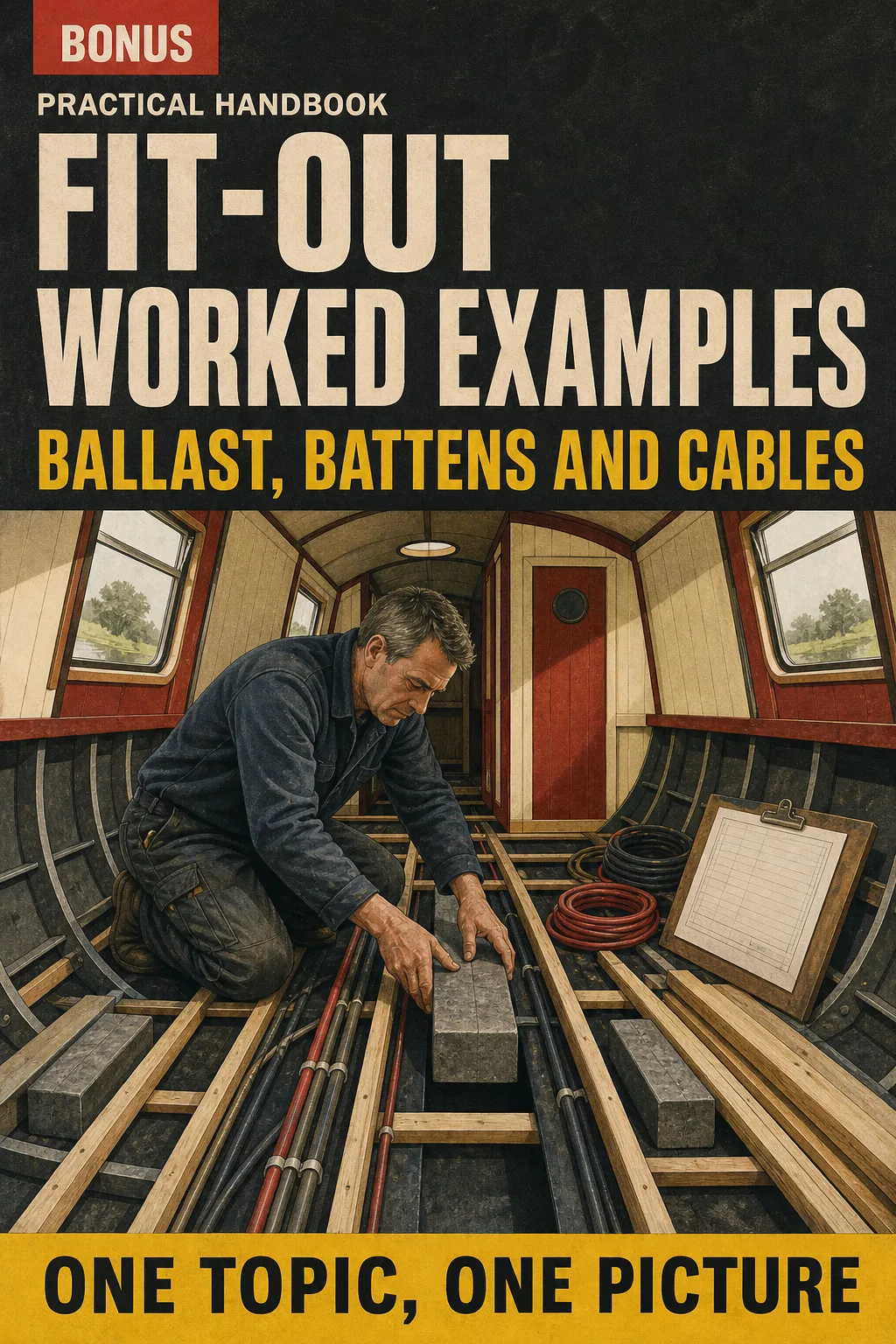
Fit-Out Worked Examples: Ballast, Battens and Cables

BONUS 1: «Fit-Out Worked Examples: Ballast, Battens and Cables»

Value on its own: US$ 17.90

Practise the sums before you cut or lift anything: ballast in kilograms, batten spacing in millimetres and cable runs, each worked through step by step.

Fit-Out Snag Cards: Common Mistakes at a Glance

BONUS 2: «Fit-Out Snag Cards: Common Mistakes at a Glance»

Value on its own: US$ 14.90

Print the cards, keep them on the boat and check each stage against the most common fit-out mistakes before you close up a wall or a floor.

Narrowboat Fit-Out Illustrated with 2 Free Books

  • Narrowboat Fit-Out Illustrated: 66 illustrated pagesUS$ 63
  • BONUS 1: Fit-Out Worked Examples: Ballast, Battens and CablesUS$ 17.90
  • BONUS 2: Fit-Out Snag Cards: Common Mistakes at a GlanceUS$ 14.90
  • High-resolution PDF to printIncluded
Total value US$ 95.80
YOUR PRICE:
US$ 27
You save US$ 68.80
YES, I WANT NARROWBOAT FIT-OUT ILLUSTRATED FOR US$ 27

📄 This is a digital PDF book sent to your email: nothing is printed or shipped.

Secure purchaseEncrypted payment30-day guarantee

PDF by email: We email you Narrowboat Fit-Out Illustrated as a PDF, together with the two free books. It's a single payment: no installments, no extra charges.

Who This Book Is For

Your shell is on order

Your shell is on order

You see the whole fit-out drawn, stage by stage, so you can plan materials and Saturdays before the shell even arrives.

The shell is on your mooring

The shell is on your mooring

Ballast, insulation and battens in the right order, with the kilograms and millimetres worked out, so the first jobs are done once.

Your boat safety examination is coming up

Your boat safety examination is coming up

Fire safety, ventilation, the 12V diagram and the close-up checklist to hand, so you go through the boat stage by stage before the examiner does.

Everything You Get Today

US$ 95.80US$ 27
YES, I WANT NARROWBOAT FIT-OUT ILLUSTRATED FOR US$ 27

📄 This is a digital PDF book sent to your email: nothing is printed or shipped.

30DAYS
GUARANTEE

30-Day Guarantee

Try Narrowboat Fit-Out Illustrated for 30 days, bonus books included.

We refund everything if the file won't open, if the book isn't what you see here, if you were charged twice or if the email doesn't arrive. Just email us.

You pay once. No subscriptions.

Frequently Asked Questions

Is it for me if I've done DIY but never fitted out a boat?

Yes. It assumes you can use tools and shows what's different on a steel boat: ballast, condensation, curved linings and 12V, in the order the job is done.

Where does the content come from?

It's checked against current UK guidance: Boat Safety Scheme guidance for private boats, the Recreational Craft Regulations 2017 and Canal & River Trust guidance. Where a safety value comes from that guidance, the page tells you which document to check, so you always work from the current version.

Is this official material?

No. It's an independent illustrated guide, and it isn't affiliated with or endorsed by any scheme or organisation.

Does it replace a course or a professional?

No. Gas work must be done by a qualified gas engineer, and 230V shore power by a qualified electrician. The book helps you plan and understand the job.

Is it written for UK boats?

Yes. Measurements are in kilograms and millimetres, and the rules are the UK ones: the boat safety examination, the Recreational Craft Regulations 2017 and Canal & River Trust guidance. The worked examples are written for this book.

When and how does it arrive?

As a PDF by email, sent to the address you enter when you pay.

Do I have to pay every month?

No. It's a one-off payment, with no subscription.

Can I have it on paper?

Yes. The PDF is made to print, so you can keep the pages on the boat next to your tools.

How does the refund work?

You have 30 days. We refund everything if the file won't open, if the book isn't what you see on this page, if you were charged twice or if the email doesn't arrive: just email us.

Before You Close This Page

No more rereading forum threads that never agree.

Vapour control, ballast and the 12V run: you see them drawn, and that's that.

You turn up every Saturday knowing what comes next on the boat.

Drawings make studying faster.

The book is right below.

One-time payment: US$ 27 · Guarantee: 30 days · PDF by email

YES, I WANT NARROWBOAT FIT-OUT ILLUSTRATED FOR US$ 27

📄 This is a digital PDF book sent to your email: nothing is printed or shipped.